

Witherspoon Institute Marks 20 Years With Boston Celebration During America’s 250th Anniversary
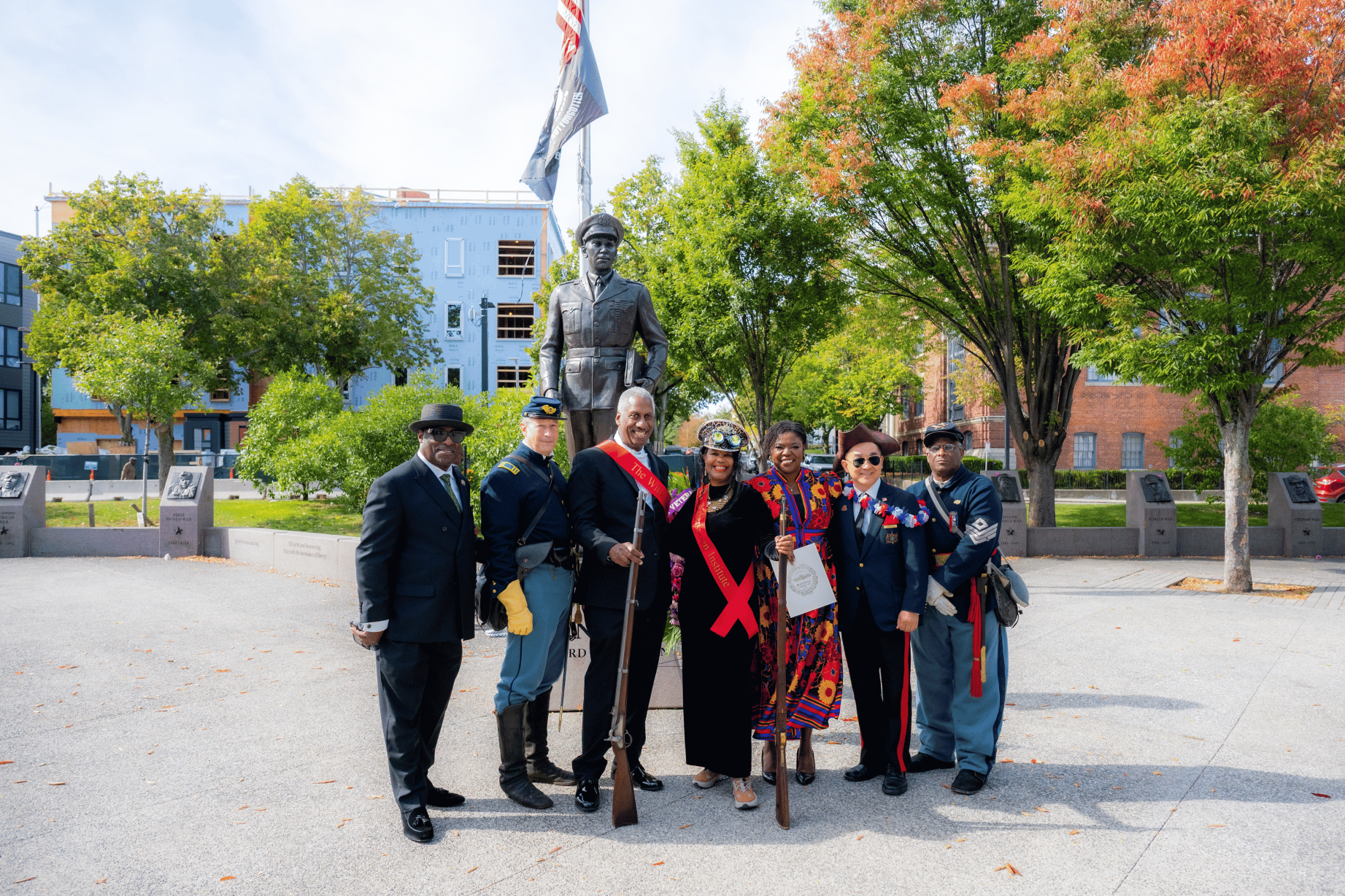
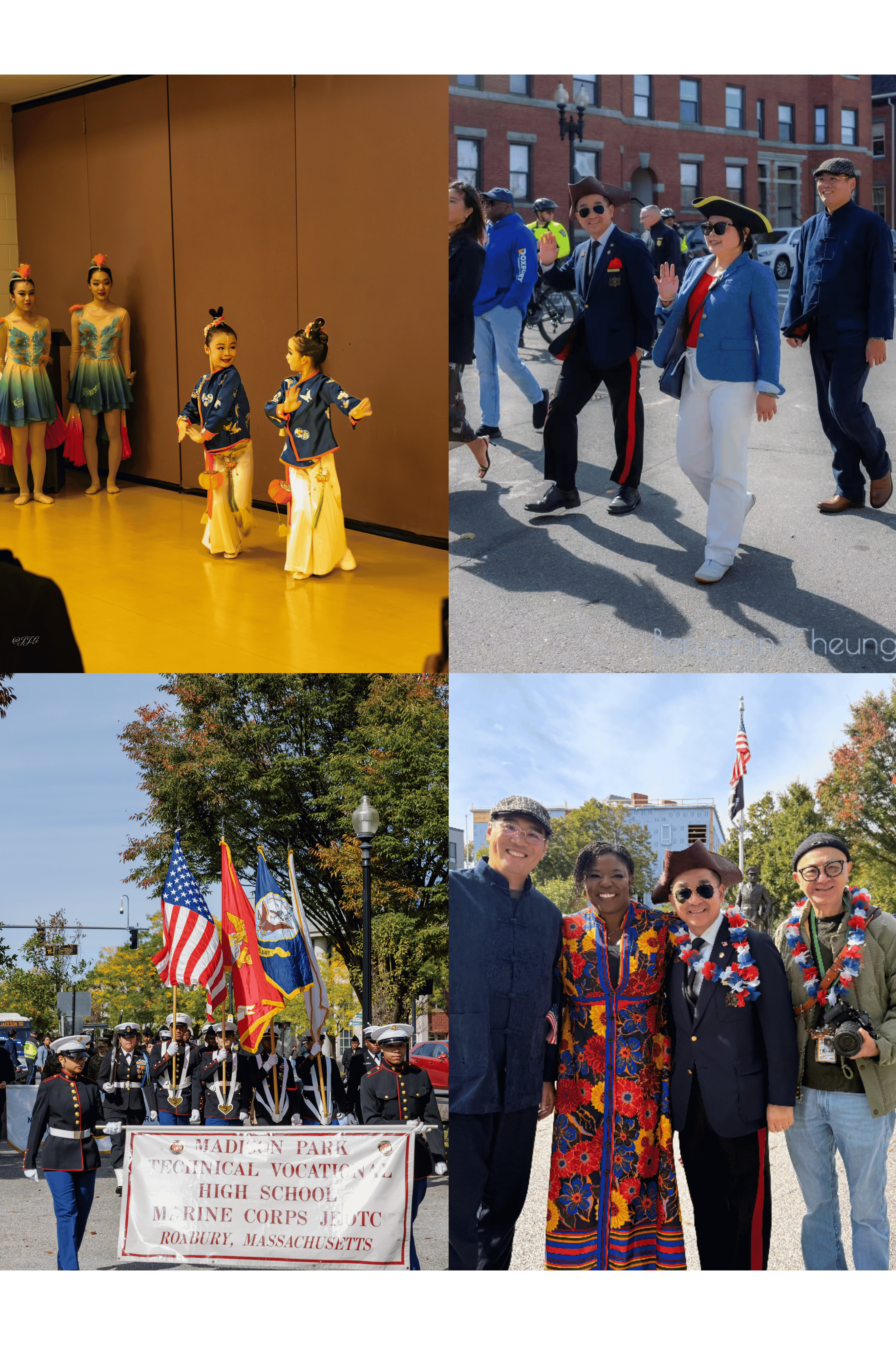
The Oct. 10 event, titled “AMERICA 250: The Witherspoon Gala,” was organized by the Witherspoon Institute of New England, known as WIN, and centered on the theme “The Stories That Made US.” The New England Chinese American Alliance, or NECAA, participated as a community partner.
The program stretched from an awards breakfast at the Reggie Lewis Track and Athletic Center to a literacy-themed parade through Roxbury and an afternoon gathering at the Boston Public Library’s Shaw-Roxbury Branch. Organizers said the goal was to connect the nation’s 250th anniversary with stories from communities whose contributions have often received less attention in traditional accounts of American history.
The celebration also highlighted the participation of Asian American individuals and organizations in education, science, entrepreneurship, the arts and civic life across Massachusetts.
The day began with the Witherspoon Awards breakfast, held under the theme “Celebrating Arts & Culture.” The ceremony recognized individuals involved in education, business, scientific research, cultural work, youth development and community service.
Music, dance and cultural performances were interspersed with award presentations throughout the morning. Among the performers were Ellie Lu, Kaili Dou, Catherine Chen and Sophie Zhou of ADA Dance School, whose appearance was part of a broader program featuring youth musicians and cultural performances.
The breakfast also drew elected officials and community representatives, including U.S. Rep. Ayanna Pressley, who represents Massachusetts’ 7th Congressional District.
A number of Chinese and Asian American honorees were recognized during the ceremony.
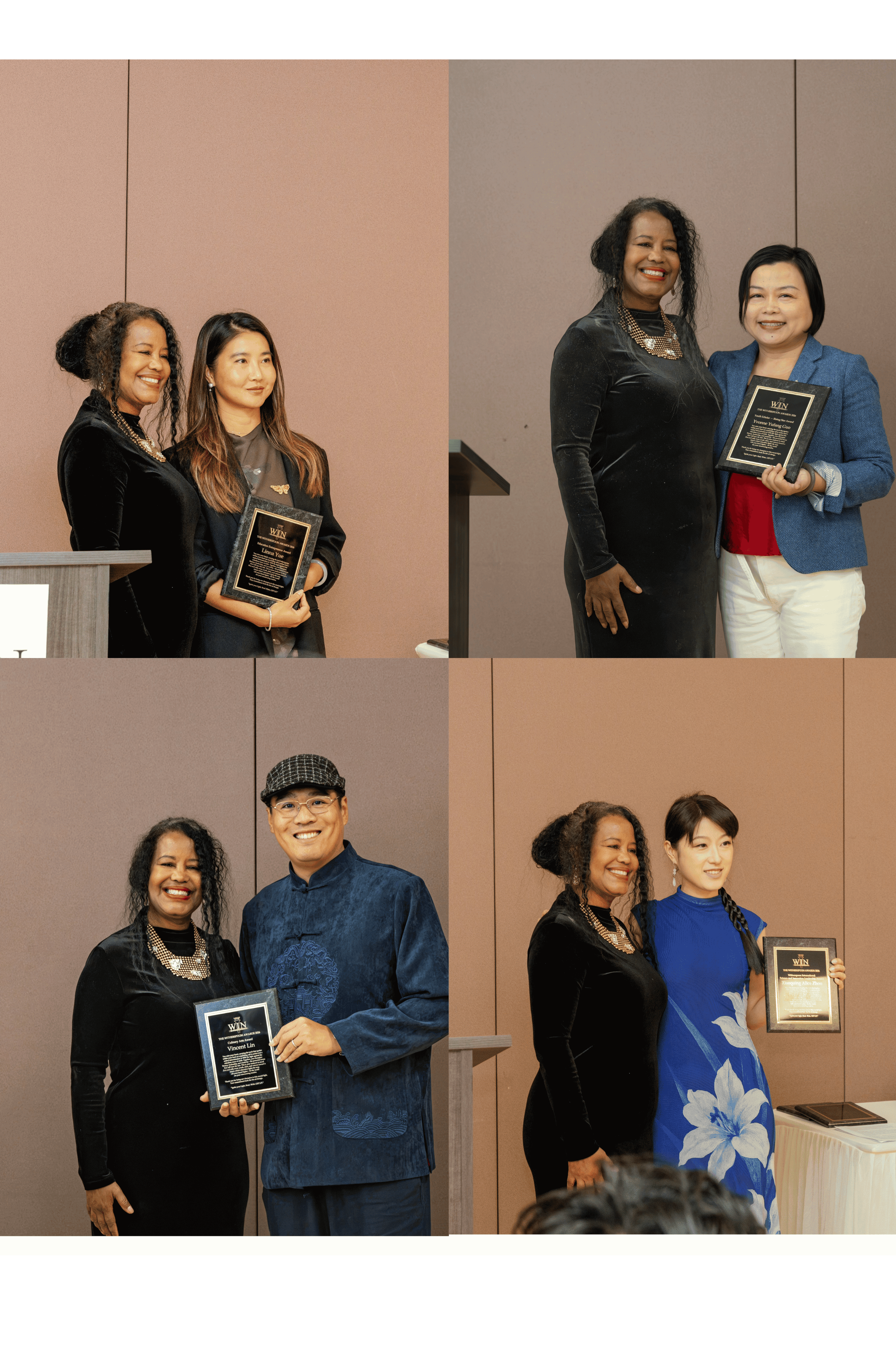
Vincent Lin, executive chef and food and beverage director at Karma, received a Culinary Arts Award recognizing his work in modern dining and his use of food as a way to promote Asian culture and community connection.
Yufang “Yvonne” Guo received a Youth Scholar and Rising Star Award for academic achievement and leadership potential. Linna Yue, founder of Pursue Beyond Education, received an Education Entrepreneur Award recognizing her work in educational innovation and expanding opportunities for students.
Jingjing Chai was honored with an Entrepreneurship and Innovation Award, while Li Li received a New Generation Enterprise Award for business leadership and strategic development.
Other youth honorees included Kuai Yu, who received a Youth Scholar and New Generation Outstanding Talent Award; Ella Yu, who received a Youth Scholar and Future Vision Award; Austin Lu, who received a Youth Scholar and Future Leader Award; and Alex Liangjie Lu, who was recognized as a Youth Scholar and Outstanding Rising Talent for his violin performance and commitment to classical music.
Liana Liang Chen received a New Generation Education Leadership Award for her work in education and youth mentorship.
Dr. Xiaoqing Alice Zhou, an investigator and neuroscientist affiliated with Harvard Medical School and Massachusetts General Hospital, received a Science and Innovation Leadership Award recognizing her work in research and scientific advancement.
Eleven honorees were also nominated for official citations from the Massachusetts House of Representatives, according to event organizers, in recognition of work spanning education, business, culture, science and youth leadership.
The range of award recipients reflected a central theme of the anniversary celebration: that American civic and cultural life is shaped not only by nationally known institutions and public officials, but also by educators, researchers, artists, entrepreneurs and community volunteers working at the local level.
For WIN founder and CEO Alda Witherspoon, the event also marked two decades of the organization’s work bringing together cultural programming, education and community engagement.
Among the award recipients, Zhou’s recognition placed scientific research within the event’s broader focus on civic and community contribution.
Yue’s Education Entrepreneur Award similarly highlighted work focused on younger generations and access to educational opportunities.
The awards program included both established professionals and younger recipients, a structure organizers used to emphasize continuity between generations. Young scholars were recognized not only for academic performance but also for leadership, creativity and cultural involvement, while adult honorees were recognized for work in business, education, science and community service.
Deacon Donald Rankins of Motivation for Success also participated in the celebration and spoke about community engagement and intergenerational encouragement.
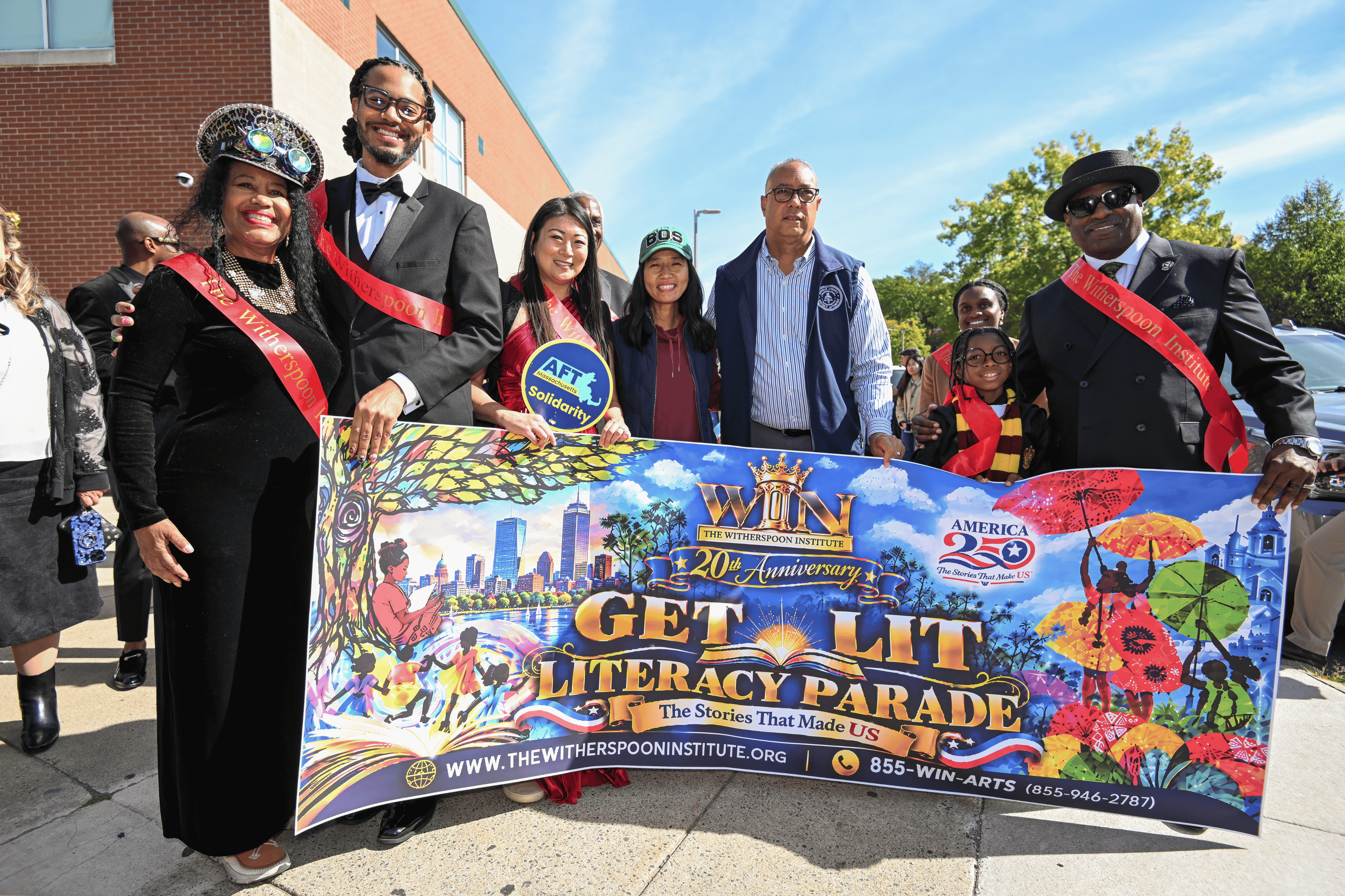
Following the morning program, the celebration moved from the Reggie Lewis Center into the streets of Roxbury with the GET LIT Literacy Parade Walk.
The parade combined literature, history, music and public participation. The route traveled along streets including Malcolm X Boulevard before reaching the Boston Public Library’s Shaw-Roxbury Branch.
Organizers incorporated historical interpretation, live performance and community participation into the procession, using the parade as a way to bring stories about American history outside traditional classrooms and museums.
Boston Mayor Michelle Wu and Suffolk County District Attorney Kevin Hayden were among the public officials who participated in the parade.
Members of the Asian American community and NECAA also took part, including Massachusetts Asian American and Pacific Islanders Commission member Gary Yu, Lexington Town Meeting Member Emma Fang and Northeastern University professor Dr. Yi Zheng.
The procession brought together community organizations, students, cultural groups and public officials in an event that combined commemoration with civic and cultural participation.
For participating organizations, the parade was intended not simply as a celebration but as a public expression of how history is remembered and who is included in that history.
That idea became especially prominent during the afternoon program at the Shaw-Roxbury Branch.
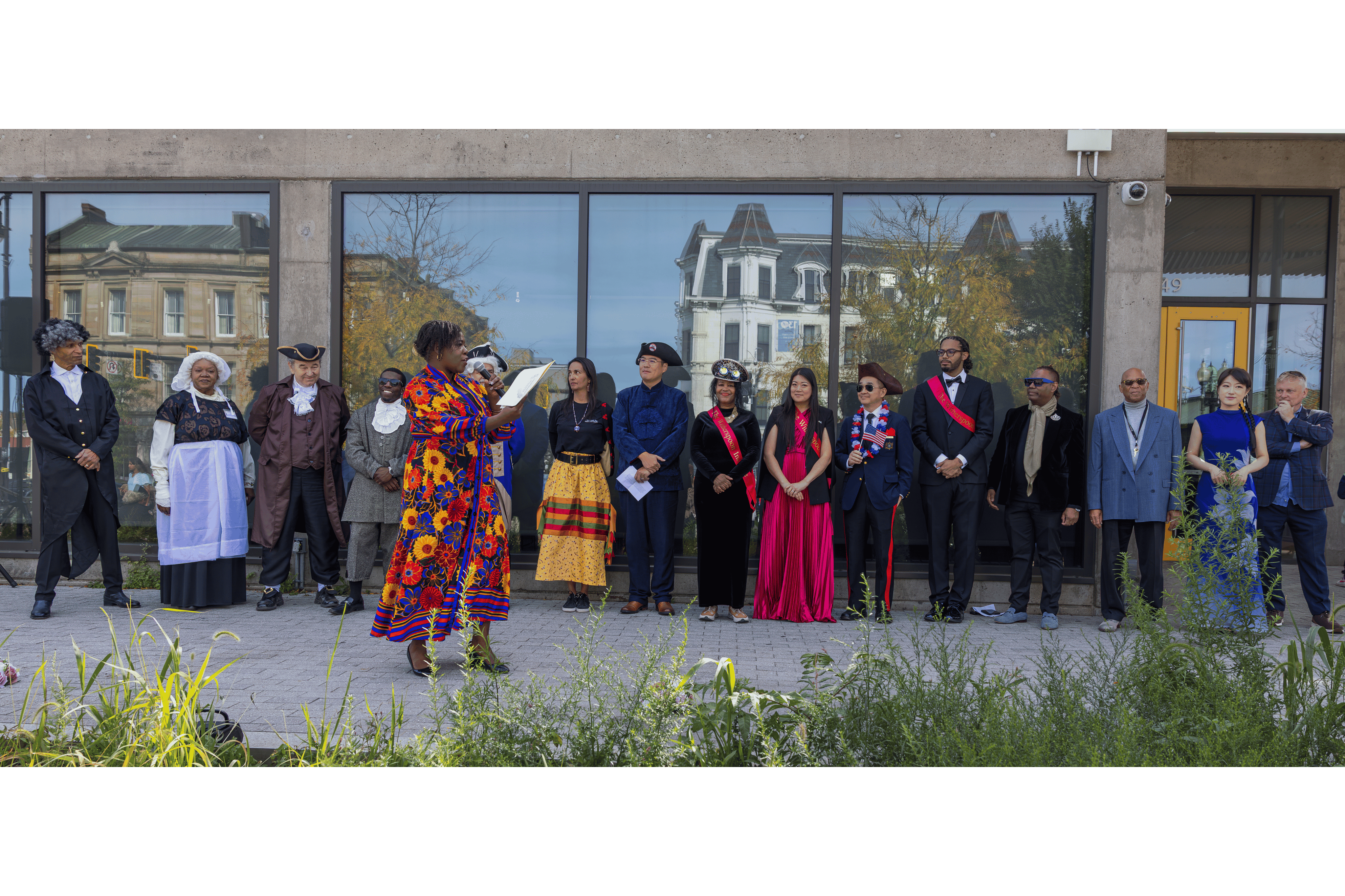
There, the celebration continued with an Autumn Garden Party and Artist Showcase, combining historical readings with cultural and artistic presentations.
One of the program’s central moments involved readings of early American historical texts by representatives from different communities.
Zheng participated as an Asian representative and joined seven other readers in presenting historical material. His selection was the 18th-century text “Malay Sailors.”
The reading drew attention to the presence of Asian laborers, merchants and sailors in the early history of the United States, including during the period surrounding the American Revolution.
Zheng said after the event that people from East and Southeast Asia were present in American society much earlier than is commonly recognized in popular historical narratives.
For him, presenting those accounts during the 250th anniversary period offered an opportunity to make those stories more visible.
The segment closely reflected the gala’s theme, “The Stories That Made US,” by emphasizing that American history was created not by one community or one cultural tradition but through the experiences of people from many backgrounds.
The use of literature and historical material also gave the event a different tone from a typical anniversary gala. Instead of focusing only on present-day achievement, organizers sought to link contemporary recognition with a broader discussion of historical memory.
The afternoon performances continued that approach through music, dance and visual storytelling centered on multicultural identity.
Participants moved between historical interpretation and contemporary cultural expression, underscoring the event’s effort to connect past and present.
The anniversary celebration came as institutions across the country prepare programs connected to the United States’ semiquincentennial.
In Boston, a city closely associated with the American Revolution, the anniversary has also created opportunities for community organizations to consider how the country’s founding and development should be presented to a modern and increasingly diverse public.
For organizers of the Witherspoon event, that meant placing stories of Black, Asian and other communities alongside more familiar narratives of American history.
The event’s honorees provided another connection between historical reflection and contemporary community life.
Zhou’s recognition for science and innovation highlighted biomedical and scientific research as one form of public and professional contribution, while Yue’s award emphasized education and opportunities for younger generations.
The awards program’s mixture of established professionals and younger recipients also reinforced the event’s intergenerational focus.
For NECAA, participation in the celebration aligned with its broader focus on community engagement, cross-cultural exchange and youth development.
The organization joined other community groups throughout the day’s programming and helped highlight Chinese and Asian American participation in the anniversary celebration.
The event also provided a platform for Asian American participants to appear not as a separate part of the program, but as one component of a larger multicultural presentation.
That approach was particularly visible in the parade and historical readings, where Asian American participants took part alongside educators, artists, local civic leaders and representatives from other communities.
The celebration concluded after an afternoon of artistic performances and community activities at the library.
Over the course of the day, the format shifted repeatedly: from a formal awards breakfast to a street procession, then to readings, performances and a public gathering. That structure allowed organizers to present the anniversary not only as a ceremonial milestone for one institution but also as a community event taking place across multiple public spaces.
The Witherspoon Institute’s 20th anniversary gave the organization an opportunity to reflect on its own work while placing that history within the larger context of the nation’s 250th anniversary.
At the same time, the participation of Asian American honorees and community representatives reflected demographic and civic changes that have reshaped Boston and Massachusetts over the past several decades.
The presence of scientists, educators, entrepreneurs, artists, students and local civic leaders demonstrated the range of areas in which Asian American communities contribute to public life.
For younger participants in particular, the event also offered examples of how cultural identity and civic participation can intersect.
The youth awards recognized achievement in education, music and leadership, while the parade and public performances placed those young participants in a setting that connected personal accomplishment with community history.
Organizers framed that intergenerational connection as an important part of the anniversary.
Rather than treating the country’s 250th anniversary only as a retrospective, the event repeatedly returned to questions about what stories will be carried forward and who will help tell them.
American history, the program suggested, includes nationally known political events, but also the experiences of sailors, workers, immigrants, educators, artists, researchers and families whose lives have shaped local communities.
That perspective was especially visible in Zheng’s reading of “Malay Sailors,” which brought an early Asian presence in America into a program otherwise focused heavily on present-day community achievement.
It was also reflected in the recognition of individuals such as Zhou and Yue, whose work represents contemporary contributions in science and education.
By placing historical readings alongside modern awards, the gala created a connection between stories from America’s past and individuals contributing to its present.
For Witherspoon and NECAA, organizers said the event also offered a foundation for future collaboration.
As WIN enters its third decade, the organizations are expected to continue working together on programs involving cultural exchange, education and community participation.
The final message of the celebration was less about defining one version of the American story than about expanding the number of people included in it.
That idea was visible from the awards stage in the morning to the streets of Roxbury at midday and the library program in the afternoon.
As the United States marks 250 years since its founding, the Witherspoon Institute’s anniversary offered one approach to commemoration: bringing more community stories into the historical record and recognizing that the country’s history continues to be shaped by the people living it today.
Ziming (Sonny) Zhao
Boston Asian Radio & TV Station
Legal Disclaimer:
EIN Presswire provides this news content "as is" without warranty of any kind. We do not accept any responsibility or liability for the accuracy, content, images, videos, licenses, completeness, legality, or reliability of the information contained in this article. If you have any complaints or copyright issues related to this article, kindly contact the author above.
